

The question you didn’t ask
If you’ve been living with dryness, burning or pain during sex since menopause and decided not to ask about hormones because of the warning — you made a reasonable decision with the information you had. The information has changed.
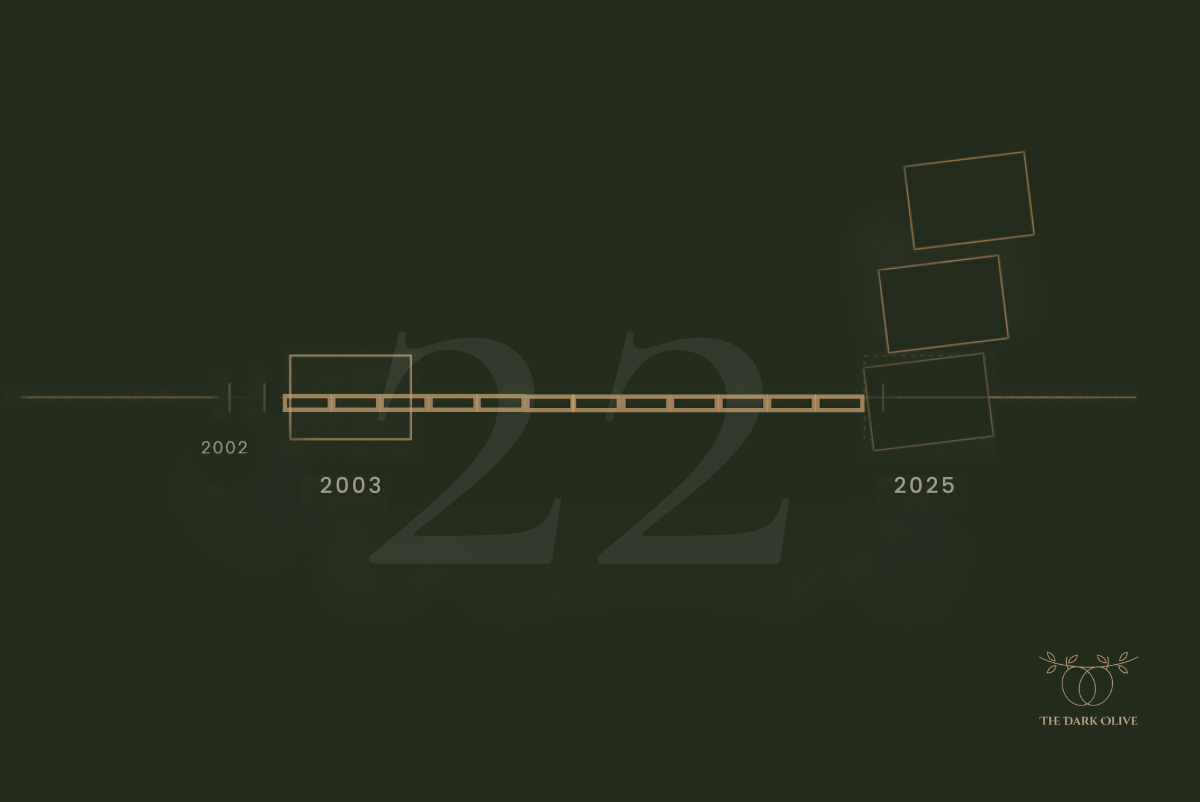
For 22 years, every estrogen product sold in the US carried a boxed warning: the strongest caution the FDA issues short of pulling a drug. It sat on pills and patches, and it sat on the small, low-dose creams, tablets and rings used inside the vagina, where very little estrogen reaches the bloodstream at all. A lot of women read that box, did the sensible thing, and went without.
On November 10, 2025, the FDA announced it was taking it off.
What everyone was told
The warning came from somewhere real. In July 2002, the Women’s Health Initiative — a large, federally funded trial — stopped its estrogen-plus-progestin arm early after finding increased risks of breast cancer and cardiovascular events. The news landed hard. Prescriptions fell sharply, and in 2003 the boxed warning went onto every estrogen product on the market.
The caution made sense at the time. A major trial had produced a worrying signal, and regulators acted on it. Nobody was trying to keep women from care.
But the warning was written broadly, and the trial was specific. It studied oral hormones, at particular doses, in women whose average age was 63 — many of them a decade or more past menopause. That logic held for that group. It was applied to everyone.
The inversion
Here’s what the label never distinguished: the difference between hormones that circulate through the whole body and a low-dose product that works locally.
Think of it as the difference between heating a house and warming your hands. Systemic hormone therapy — a pill or a patch — raises hormone levels throughout the body. Low-dose vaginal estrogen is applied directly to the tissue that needs it, and only minimal amounts are absorbed into the bloodstream. The same box went on both.
Re-analyses of the trial data over the following two decades also pointed to timing. When the FDA announced the change, it cited evidence that women who start hormone therapy within ten years of menopause show reductions in all-cause mortality and fractures, rather than the across-the-board risks the warning implied.
What came off: the boxed warnings on cardiovascular disease, breast cancer and probable dementia. What stayed: the boxed warning for endometrial cancer with systemic estrogen-alone products, which is why women with a uterus who take systemic estrogen are prescribed a progestogen alongside it. That’s not a footnote. It’s the part of the original caution that the evidence still supports.
One practical note, because it affects what you’ll actually see. The FDA has initiated the removal and asked manufacturers to update their labeling — it didn’t reach into every pharmacy overnight. Labels change on each manufacturer’s schedule, so a box in your hand may still carry the old warning for a while. That’s a paperwork lag, not a live caution.
What this means in real life
The symptoms the warning most affected have a name that most women have never heard: genitourinary syndrome of menopause, or GSM. The International Society for the Study of Women’s Sexual Health and the North American Menopause Society introduced the term in 2014 to replace “vulvovaginal atrophy,” which described the tissue and ignored the person.
GSM covers what happens when estrogen falls and the tissue of the vulva, vagina and lower urinary tract becomes thinner, less elastic and less well lubricated: dryness, burning, irritation, urgency, recurrent urinary infections, and pain during penetration. Reported prevalence ranges from 14% to 87% of postmenopausal women depending on how it’s measured. Between 40% and 54% report symptoms that bother them.
Here’s the part that tends to produce a specific kind of frustration. Unlike hot flashes, GSM usually doesn’t fade with time. It tends to progress. So “wait it out” — the default advice for so many menopause symptoms — is the wrong advice for this one. And yet more than half of affected women use no treatment, and fewer than a quarter receive appropriate care.
That gap was never about a lack of options. It was about a label that made asking feel risky, and appointments that rarely raised it.
What actually helps
There’s a range, and it’s wider than most women are offered.
- Lubricants reduce friction and pain during sex. They work in the moment and don’t change the tissue. (November’s Journal covers how to choose one — osmolality matters more than most labels admit.)
- Vaginal moisturizers are used regularly, not just before sex, and help the tissue hold water.
- Low-dose vaginal estrogen — cream, tablet or ring — treats the tissue change itself. It’s the option the old label most discouraged.
- Other prescription options exist for women who can’t or prefer not to use estrogen, and a clinician can walk through them.
- Pelvic floor physical therapy helps when the pain has taught the muscles to brace.
If you’ve had breast cancer, or another reason to be cautious with hormones, that’s a conversation for your oncologist or gynecologist, and it’s a different conversation than it was two years ago. Bring the question either way. The label is no longer a reason not to ask.
Products we carry for dryness and comfort are in Care & accessories, and the quiz is a starting point if you’re not sure which category fits.
What the label was really doing
For 22 years, a single warning stood between a lot of women and a conversation about their own bodies. It was written for one group and applied to everyone.
The label changed. Now the conversation can.
Sources
U.S. Department of Health and Human Services / U.S. Food and Drug Administration. “HHS Advances Women’s Health, Removes Misleading FDA Warnings on Hormone Replacement Therapy.” Press announcement, November 10, 2025.
Writing Group for the Women’s Health Initiative Investigators. “Risks and Benefits of Estrogen Plus Progestin in Healthy Postmenopausal Women.” JAMA, 2002;288(3):321–333.
Portman DJ, Gass MLS. “Genitourinary syndrome of menopause: new terminology for vulvovaginal atrophy from the International Society for the Study of Women’s Sexual Health and the North American Menopause Society.” Menopause, 2014;21(10):1063–1068.
“Genitourinary Syndrome of Menopause.” StatPearls, NCBI Bookshelf, NBK559297.