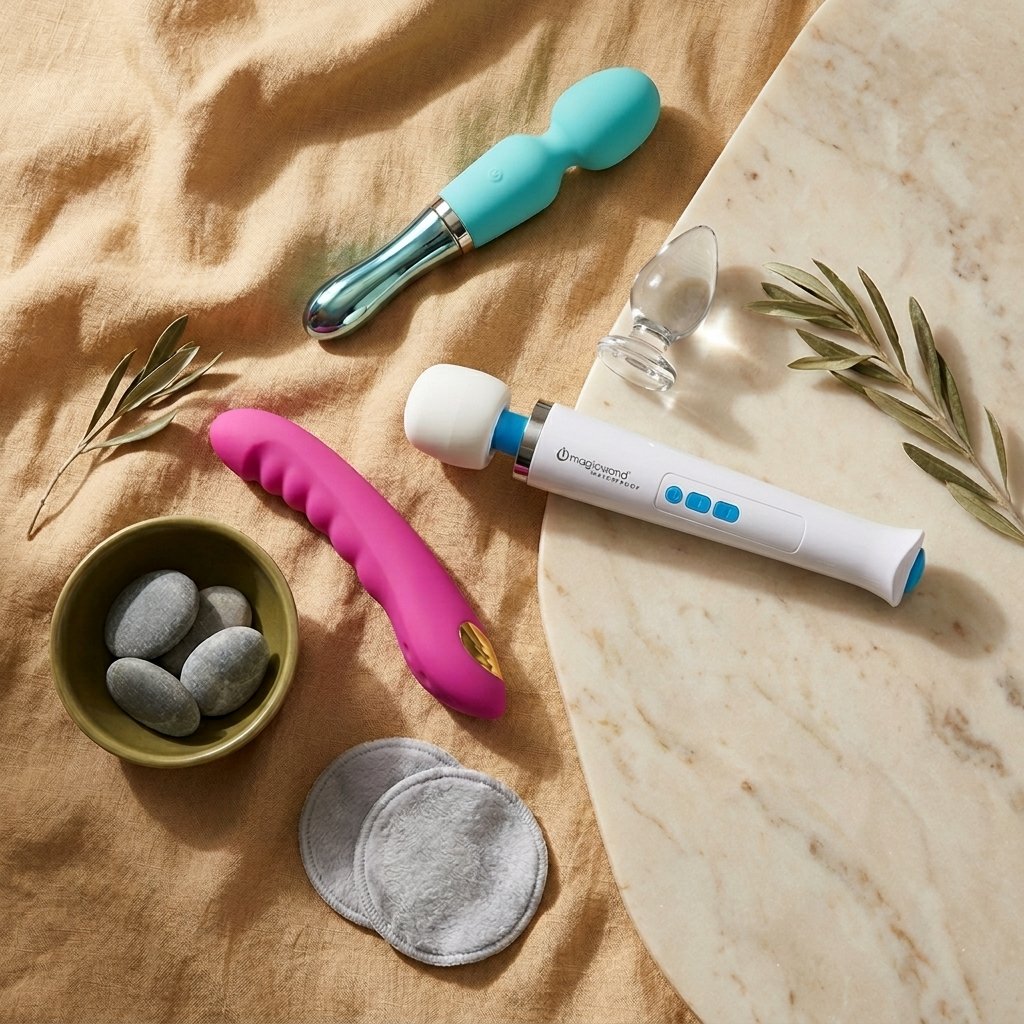

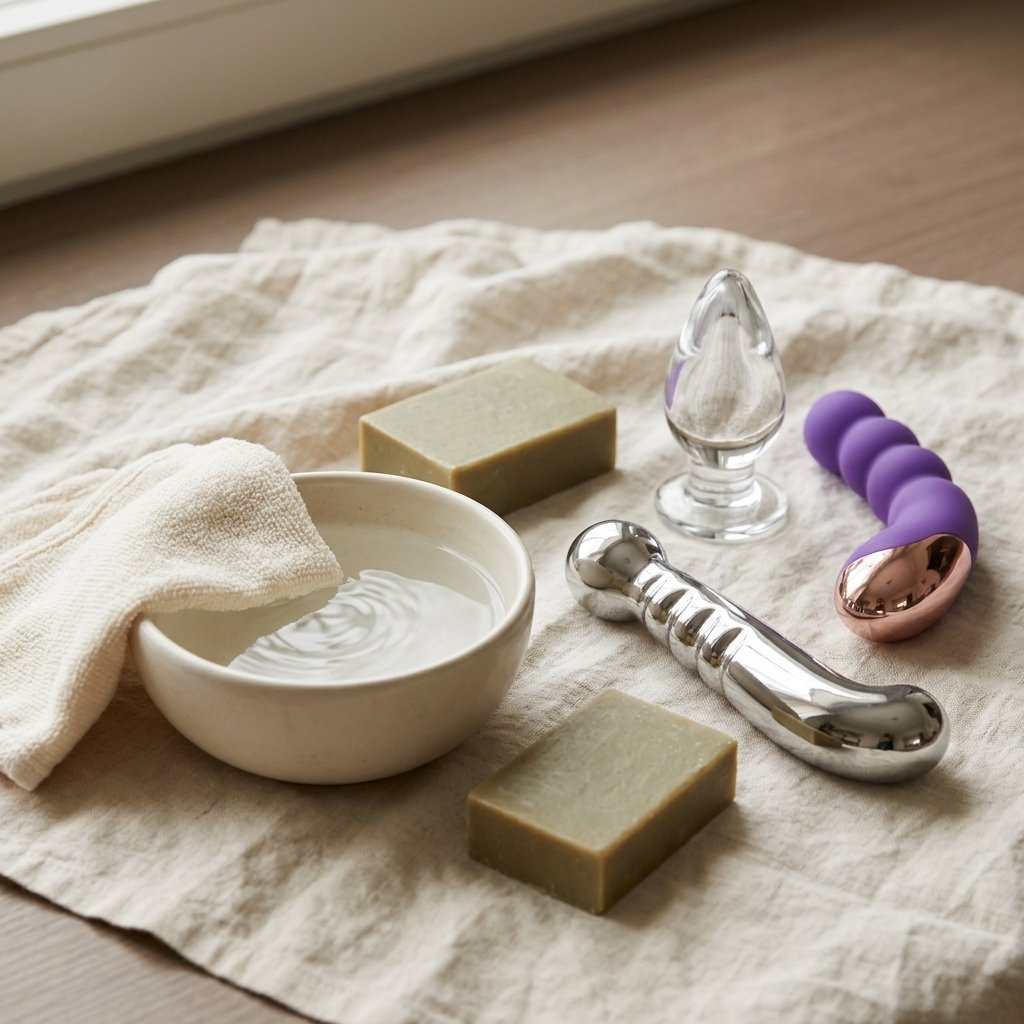
Because the products you invest in deserve to last — and your body deserves better than guesswork.
Nobody hands you a care manual when you start building a pleasure collection. You figure it out as you go — a quick rinse here, a wipe-down there — and assume it’s fine. For the most part, it probably is. But there’s a version of this that actually protects your health, extends the life of your products, and makes the whole experience more intentional. That version isn’t complicated. It just requires knowing a few things.
This guide covers everything: why cleaning matters beyond the obvious, how to approach different materials, what to store your products in, and what not to do. Consider it the care manual you were never given.
Why Proper Cleaning Is a Health Issue, Not Just a Hygiene Habit
The vaginal environment is a finely tuned ecosystem. Research published in the journal Microorganisms describes a healthy vaginal microbiome as one dominated by Lactobacillus species, which produce lactic acid to maintain an acidic pH that naturally defends against pathogens. When that balance is disrupted — even by something seemingly benign — the consequences can include bacterial vaginosis, yeast infections, and increased susceptibility to other infections.
Source: McMillan et al. (2023). “The Vaginal Microbiome in Health and Disease — What Role Do Common Intimate Hygiene Practices Play?” Microorganisms, PMC9959050.
A study published in PLOS ONE confirmed that certain intimate hygiene products can negatively affect the survival of beneficial Lactobacillus species and compromise epithelial cell integrity — meaning that what touches your body matters, including the products used to clean your intimate products.
Source: Fashemi et al. (2013). “Effects of Feminine Hygiene Products on the Vaginal Mucosal Biome.” Microbial Ecology in Health & Disease, PMC3758931.
Research published in ScienceDirect’s Journal of Obstetrics and Gynaecology further found that intimate practices that alter vaginal pH or disrupt the vaginal epithelium — including use of harsh soaps or improperly cleaned products — are associated with higher rates of reproductive tract infections.
Source: Ismail et al. (2022). “Intimate Hygiene Practices and Reproductive Tract Infections: A Systematic Review.” Journal of Obstetrics and Gynaecology, ScienceDirect.
The practical takeaway: unclean or improperly cleaned intimate products can introduce or reintroduce bacteria into a delicate environment. This isn’t alarmism — it’s anatomy.
The Material Question: Porous vs. Non-Porous
Not all intimate products clean the same way, because not all materials behave the same way. The single most important thing to understand before you clean anything is whether it’s porous or non-porous.
Non-Porous Materials
Non-porous materials — medical-grade silicone, borosilicate glass, stainless steel, and ABS hard plastic — have smooth, sealed surfaces that don’t absorb bacteria, oils, or residue. They can be thoroughly cleaned and, where applicable, sterilized. These are the gold standard for intimate wellness products.
Research in ScienceDirect’s Food and Chemical Toxicology journal notes that 100% pure silicone is among the safest materials for human tissue contact, with rare incidence of allergic reaction and excellent resistance to bacteria retention when properly maintained.
Source: Svobodova et al. (2020). “Safety Testing of Adult Novelties Using In Vitro Methods.” Food and Chemical Toxicology. ScienceDirect.
Porous Materials
Porous materials — thermoplastic rubber (TPR), thermoplastic elastomer (TPE), latex, PVC, and jelly rubber — contain microscopic surface openings that can trap bacteria, body fluids, and cleaning agents even after washing. These materials cannot be fully sterilized and pose a higher risk of harbor-and-reintroduce cycles for bacteria.
A 2023 PMC study on intimate product risk explicitly flagged porous materials as harder to clean, noting that pathogens including HPV, Gardnerella vaginalis, and H₂O₂-producing lactobacilli have been reported as transmissible via inadequately cleaned intimate product surfaces.
Source: Sipe et al. (2023). “Bringing Sex Toys Out of the Dark: Exploring Unmitigated Risks.” PMC10034881.
If your product is made from a porous material, the safe approach is to use a condom over it during use and replace it more frequently than you would a non-porous product.
How to Clean by Material: The Actual Guide
Here’s the breakdown you actually need — matched to material type.
Medical-Grade Silicone
Silicone is durable, body-safe, and easy to maintain. If the product has no electronic components:
- Boil in water for 3–5 minutes to fully sanitize between uses or before first use.
- Run it through the top rack of a dishwasher (no detergent) for a hands-off clean.
- Wash with warm water and a fragrance-free, pH-neutral soap for routine after-use cleaning.
- Pat dry with a clean lint-free cloth or allow to air dry completely before storing.
If your silicone product contains a motor or electronic components, do not submerge it. Instead, wipe it down thoroughly with a damp cloth and fragrance-free soap, or use a dedicated intimate product cleaner.
Borosilicate Glass
Glass is non-porous, body-safe, and temperature-responsive — making it one of the easiest materials to care for.
- Hand-wash with warm water and mild soap. Glass can handle dishwasher cleaning as well.
- Inspect for chips, cracks, or surface damage before each use. A compromised surface is a reason to retire the product, not clean it more carefully.
- Dry completely and store in a padded pouch or wrapped in a soft cloth to prevent surface contact with other items.
Stainless Steel
Stainless steel is one of the most hygienic materials available — non-porous, non-reactive, and easy to clean.
- Wash with warm water and mild soap after each use.
- Can be boiled for full sterilization.
- Polish dry to prevent water spots and store separately to avoid surface scratching.
ABS Hard Plastic
ABS is non-porous and generally safe, but it cannot be boiled or subjected to high heat, as this can warp or damage the material.
- Wipe with a damp cloth and mild soap, or use an intimate-product-safe toy cleaner.
- Do not submerge if electronics are present.
- Dry thoroughly before storage.
Porous Materials (TPR, TPE, Latex, Jelly Rubber)
These require the most caution. No cleaning method fully eliminates bacteria from porous surfaces.
- Wash with warm water and mild soap after every use, even though this does not fully sanitize.
- Use a condom over the product during use if you plan to keep it — this reduces bacterial exposure significantly.
- Do not share porous products between partners.
- Replace more frequently than non-porous products.
Choosing the Right Cleaner
Not all soaps are appropriate for intimate product care — and the wrong choice can both damage your product and affect your body’s microbiome.
Research from PMC’s clinical study on intimate gel wash formulations found that products with an acidic pH (around 4.2) preserved vulvar microbiome diversity and did not disrupt natural pH levels over a 28-day period — confirming that pH-conscious formulas are far less disruptive than conventional soaps.
Source: Larson et al. (2020). “28 Day Clinical Assessment of a Lactic Acid-Containing Antimicrobial Intimate Gel Wash Formulation on Skin Tolerance and Impact on the Vulvar Microbiome.” PMC7168340.
What to look for in a cleaner:
- Fragrance-free or formulated with skin-safe botanical scents only
- pH-neutral or slightly acidic (pH 4.0–5.5)
- Free of sulfates, parabens, and alcohol
- Labeled as safe for intimate product use or body-safe materials
What to avoid:
- Antibacterial soaps — these can leave residue and disrupt vaginal flora on contact
- Bleach-based or alcohol-heavy cleaners — corrosive to silicone and skin
- Scented soaps, body washes, or hand sanitizers
- Hydrogen peroxide on silicone — degrades the material over time
Drying and Storage: The Part Everyone Skips
Cleaning your product thoroughly and then storing it damp in a closed drawer is counterproductive. Moisture is where bacteria thrive. A 2015 study in Frontiers in Microbiology on vaginal biofilms highlighted that bacterial communities — particularly Gardnerella vaginalis — form protective biofilm structures that are significantly harder to disrupt once established, making prevention far more important than remediation.
Source: Castro et al. (2015). “Bacterial Vaginosis Biofilms: Challenges to Current Therapies and Emerging Solutions.” Frontiers in Microbiology, PMC4718981.
Best practices for drying and storage:
- Air dry completely before storing. Set your product on a clean surface or hang it in a ventilated area for at least 30 minutes.
- Store in a dedicated pouch or bag. Most quality products come with a storage pouch — use it. Cotton or satin bags allow airflow while keeping the product clean.
- Avoid airtight containers unless the product has been fully dried. A sealed environment with any residual moisture creates ideal conditions for bacterial or fungal growth.
- Store separately. Glass and metal products can chip or scratch softer materials when stored together. Keep them in individual pouches.
- Away from extreme heat or UV exposure. Direct sunlight or heat (like inside a car) can degrade silicone and other materials over time.
A Note on Lubrication and Material Compatibility
How you use a product affects how you clean it — and using the wrong lubricant can damage the material itself.
- Silicone-based lubricants should not be used with silicone products. Silicone degrades silicone, creating a rough, porous surface over time. Use water-based lubricant with silicone products.
- Water-based lubricants are compatible with all non-porous materials — silicone, glass, and ABS plastic.
- Oil-based lubricants are compatible with glass and stainless steel but will degrade latex and many porous materials. They also require more thorough cleaning.
If you’re unsure: water-based is always the safest choice for both your product and your body.
When to Retire a Product
Even the most well-maintained product has a lifespan. Here are the signs it’s time to let go:
- Visible cracks, chips, or surface damage (especially critical for glass and hard plastic)
- Persistent odor that doesn’t clear after thorough cleaning
- Discoloration, surface stickiness, or texture changes — particularly in silicone products
- A motor that’s lost power or a charging port that shows corrosion
- Products from before you understood material safety — if you don’t know what it’s made of, it’s time to upgrade
Quick-Reference: Cleaning by Material
| Material | Cleaning Method | Sterilizable? |
|---|---|---|
| Silicone (no motor) | Boil / Dishwasher / Soap + Water | Yes |
| Silicone (with motor) | Damp cloth + pH-neutral soap | No |
| Borosilicate Glass | Soap + water or dishwasher | Yes |
| Stainless Steel | Soap + water or boiling | Yes |
| ABS Hard Plastic | Damp cloth + mild soap | No (heat-sensitive) |
| Porous (TPR / TPE / Latex) | Warm water + soap + condom during use | No |
The Bottom Line
Caring for your intimate products isn’t precious or overcomplicated — it’s just maintenance. The right routine takes less than five minutes and makes a meaningful difference both in how long your products last and how confidently you can use them.
Your vaginal microbiome is sensitive, self-regulating, and worth protecting. The research is clear that what comes into contact with that environment — including how you maintain your pleasure products — has a real impact. Making informed choices here is part of having a full, considered approach to your own wellness.
That’s what The Dark Olive is built around: the idea that intimate wellness deserves the same thoughtfulness and quality you’d apply to anything else you invest in. SHOP
References & Further Reading
1. McMillan et al. (2023). “The Vaginal Microbiome in Health and Disease — What Role Do Common Intimate Hygiene Practices Play?” Microorganisms. PMC9959050
2. Fashemi et al. (2013). “Effects of Feminine Hygiene Products on the Vaginal Mucosal Biome.” Microbial Ecology in Health & Disease. PMC3758931
3. Ismail et al. (2022). “Intimate Hygiene Practices and Reproductive Tract Infections: A Systematic Review.” Journal of Obstetrics and Gynaecology. ScienceDirect.
4. Magoutas et al. (2025). “Investigating the Link Between Intimate Health, Hygiene and Sexual Practices and the Vaginal Microbiome.” Reproductive Medicine and Biology. Wiley.
5. Svobodova et al. (2020). “Safety Testing of Adult Novelties Using In Vitro Methods.” Food and Chemical Toxicology. ScienceDirect.
6. Sipe et al. (2023). “Bringing Sex Toys Out of the Dark: Exploring Unmitigated Risks.” PMC10034881
7. Larson et al. (2020). “28 Day Clinical Assessment of a Lactic Acid-Containing Antimicrobial Intimate Gel Wash Formulation.” PMC7168340
8. Castro et al. (2015). “Bacterial Vaginosis Biofilms: Challenges to Current Therapies and Emerging Solutions.” Frontiers in Microbiology. PMC4718981